Can Facials Help Melasma? What Professional Treatments Can and Cannot Do
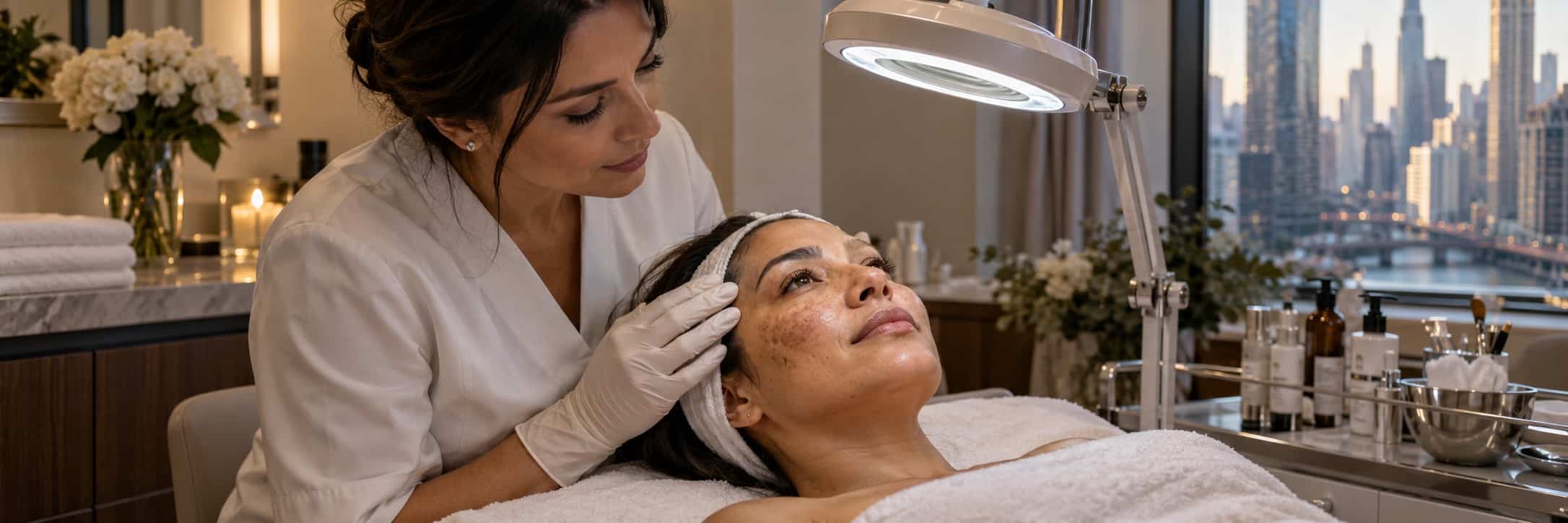
If you have melasma, you have probably seen a long list of treatments promising to fade it.
Brightening facials.
Chemical peels.
Serums.
Microneedling.
Lasers.
Vitamin C.
Exfoliation.
And then there are the before and after photos that make it look like one treatment completely erased years of pigmentation.
So it is completely reasonable to ask:
Can a facial actually help melasma?
The answer is yes, professional skincare can help improve the appearance of melasma for some people.
But there is a very important second part to that answer.
A facial cannot cure melasma.
And the wrong treatment can sometimes make pigmentation worse.
At Lulu Beauty Spa in Chicago, we work with clients concerned about melasma, hyperpigmentation, dark spots and uneven skin tone. One of the most important things we want our clients to understand is that successful pigmentation care is usually not about finding the strongest possible treatment.
It is about understanding your skin, protecting it from known triggers and choosing professional treatments carefully.
If you are considering a melasma facial in Chicago, here is what professional facials can realistically do, what they cannot do and what you should know before booking.
What Is Melasma?
Melasma is a pigmentation condition that creates brown, tan or sometimes grayish brown patches on the skin.
It most commonly appears on areas of the face including the cheeks, forehead, nose, upper lip and chin.
Unlike an isolated sun spot, melasma often appears in larger patches and can develop somewhat symmetrically on both sides of the face.
Sun exposure is one of the most important triggers.
Hormones may also play a role, which is why melasma frequently appears during pregnancy, after hormonal changes or in people taking certain hormonal medications.
Melasma can last for years and, for some people, can be extremely persistent.
The American Academy of Dermatology explains that there is no single best treatment for melasma. Treatment is usually individualized and may combine sun protection, topical medication and sometimes professional procedures.
That is important to understand before we even talk about facials.
Melasma usually needs a strategy, not one miracle treatment.
So Can Facials Help Melasma?
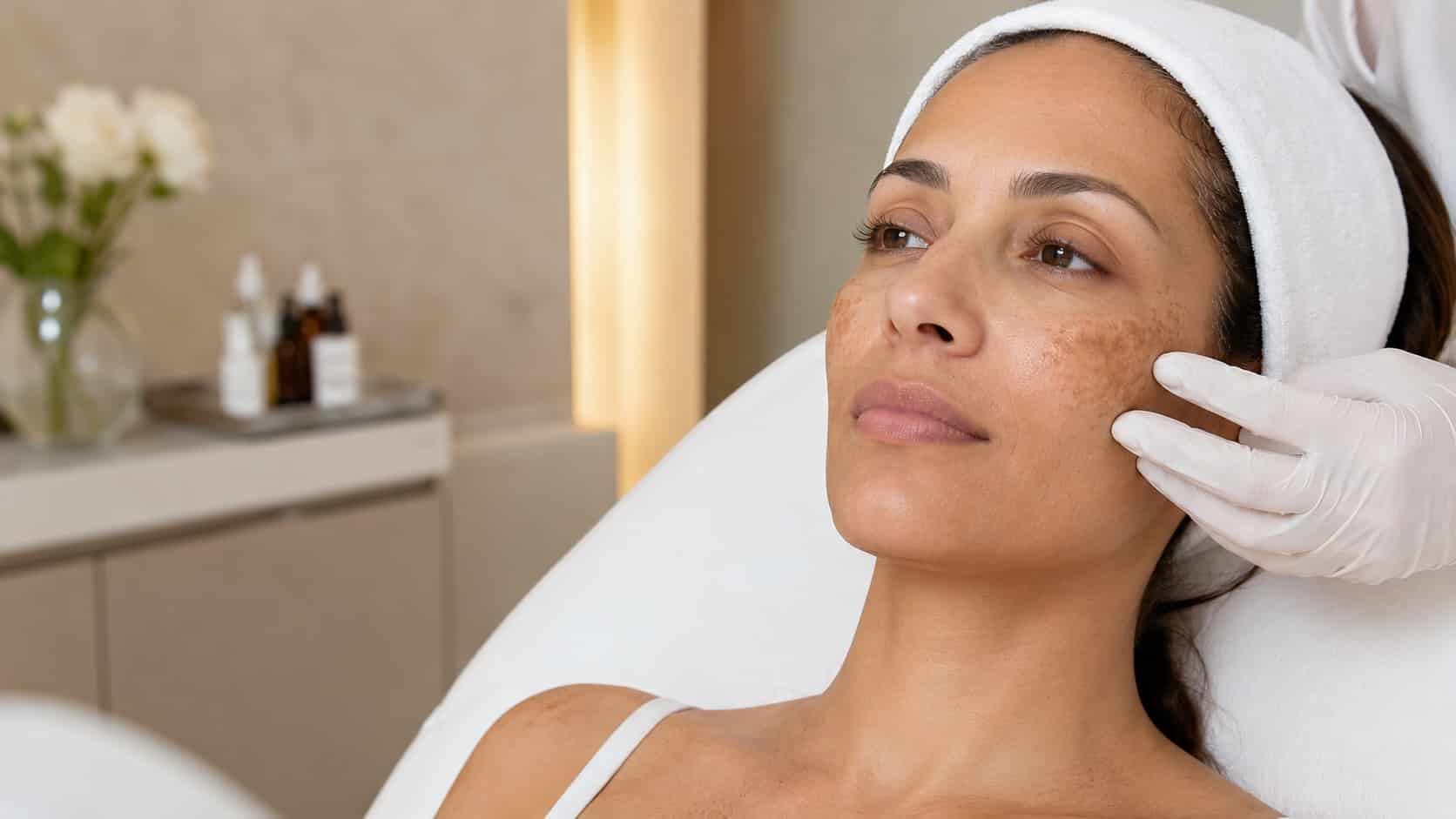
Yes, they can help improve the appearance of the skin when they are chosen appropriately.
Professional facials may help with things such as:
Improving the appearance of uneven skin tone.
Removing excess surface buildup.
Supporting healthy skin turnover.
Providing controlled exfoliation when appropriate.
Improving hydration.
Supporting the skin barrier.
Helping introduce appropriate brightening ingredients.
Creating a more consistent professional skincare routine.
Helping you understand what products you should and should not be using at home.
But the exact facial that makes sense for you depends on your skin.
Someone with healthy, resilient skin and superficial pigmentation may tolerate more active treatment.
Someone whose skin is already irritated from retinoids, acids, scrubs and brightening products may need something much gentler.
Someone with suspected melasma that has never been medically diagnosed may benefit from seeing a dermatologist as part of the process.
That is why we do not believe in putting every pigmentation client through exactly the same facial.
What Can a Facial Actually Do for Melasma?

A well chosen facial can support your overall pigmentation plan.
Think of professional skincare as one piece of the puzzle rather than the entire solution.
A Facial Can Help Improve Surface Pigmentation
Some pigmentation is closer to the surface of the skin than other pigmentation.
Carefully controlled exfoliation may help remove pigmented surface cells and gradually improve the appearance of uneven tone.
Certain superficial chemical peels are also used professionally for pigmentation concerns including melasma.
But this does not mean that everyone with melasma should immediately receive a peel.
The type of pigment, skin tone, sensitivity and overall condition of the skin matter.
A Facial Can Help Support Your Skin Barrier
This is one of the least glamorous parts of pigmentation care, but it is incredibly important.
Sometimes clients come in using so many active products that their skin is irritated before we ever touch it.
They may be using retinol.
Vitamin C.
Glycolic acid.
Salicylic acid.
Brightening products.
Scrubs.
Peels.
And several serums on top of that.
They are trying to fade the pigmentation faster.
Instead, their skin becomes sensitive, dry, inflamed and reactive.
Irritation can make dark spots more noticeable.
Dermatologists specifically recommend gentle skincare for people with melasma because products that burn or sting may darken pigmentation.
Sometimes the best thing we can do during a professional facial is calm the skin down before trying to do more.
A Facial Can Help You Create a Better Home Routine
What happens between appointments matters enormously.
You could receive a beautiful professional treatment once a month, but if your daily routine is constantly irritating your skin or you are not protecting it from the sun, your progress may be limited.
During a pigmentation focused appointment, we can talk about what you are using.
We can look at whether your routine has become unnecessarily complicated.
We can discuss ingredients that may be appropriate for your cosmetic skincare routine.
And sometimes we can tell you that you are simply doing too much.
More products do not automatically mean better results.
What Can a Facial Not Do for Melasma?
This part is just as important.
A Facial Cannot Permanently Cure Melasma
Melasma is known for recurring.
Even after significant improvement, pigmentation can return when triggers are reintroduced.
Sun exposure is one of the biggest examples.
The American Academy of Dermatology notes that melasma can last for years and sometimes much longer. Even with treatment, maintaining results generally requires ongoing sun protection and management.
So if someone tells you that one facial will permanently remove your melasma, be careful.
We would much rather give you realistic expectations than promise something your skin may not be able to deliver.
A Facial Cannot Stop Hormonal Triggers
If hormones are contributing to your melasma, an esthetic facial cannot change those hormones.
Professional skincare may help improve how the pigmentation looks, but it does not remove every underlying trigger.
That is another reason some clients benefit from working with both an esthetician and a dermatologist or other medical provider.
A Facial Cannot Replace Prescription Treatment
Dermatologists have access to prescription treatments that estheticians do not.
Depending on the individual patient, a dermatologist may prescribe treatments such as hydroquinone, tretinoin, combination creams, azelaic acid or other medications.
An esthetician works on the cosmetic skincare side.
The two approaches do not need to compete.
For some people, professional facials and medical treatment can be complementary parts of a larger pigmentation plan.
Can a Chemical Peel Help Melasma?
Chemical peels are one of the professional treatments people commonly ask about.
They can help certain pigmentation concerns.
Dermatologists use chemical peels to improve discoloration, melasma, sun damage and uneven tone.
But this is where the word “stronger” becomes dangerous.
A stronger peel does not automatically create a better result.
Melasma is sensitive to inflammation.
DermNet notes that chemical peels and lasers may help melasma but can also worsen it or trigger post inflammatory hyperpigmentation, particularly when not used carefully.
This is particularly important if you have medium, olive, brown or deeper skin.
Skin that produces pigment easily may respond to excessive inflammation by creating even more pigment.
That is why we do not believe the right question is:
“What is the strongest peel you have?”
A much better question is:
“What can my skin safely tolerate?”
What About Microneedling for Melasma?
Microneedling is another professional treatment sometimes used as part of medical melasma treatment.
The American Academy of Dermatology lists microneedling among procedures dermatologists may add to a melasma treatment plan in certain patients.
However, this does not mean everyone with melasma needs microneedling.
Melasma treatment needs to be individualized.
The depth and pattern of pigmentation, skin tone, current medications and other treatments can all influence the decision.
If you are considering more advanced procedures for diagnosed melasma, this is an area where a board certified dermatologist can be particularly helpful.
Are Lasers Good for Melasma?
This is complicated.
Lasers and light treatments can improve melasma in certain patients.
But they can also cause problems.
Melasma has a reputation for being difficult because aggressive treatments can sometimes lead to rebound pigmentation or additional inflammation.
DermNet cautions that laser and light based treatments can carry a risk of relapse and worsening pigmentation and therefore require expert use.
If someone tells you that a laser is guaranteed to permanently remove melasma, that should raise questions.
This is not a condition where more aggressive always means more successful.
Why Can Melasma Look Worse After a Facial?
There are several possibilities.
The skin may have been exfoliated too aggressively.
The products may have caused irritation.
You may have combined a professional treatment with strong products at home.
You may have received too much sun afterward.
Your skin barrier may already have been compromised before the treatment.
Or the treatment may simply not have been appropriate for your skin.
Inflammation can stimulate additional pigmentation, especially in pigment prone skin.
This is one reason professional treatments for melasma should not feel like someone is trying to attack the dark patches until they disappear.
Good pigmentation care often requires patience.
What Is the Best Facial for Melasma?
There is no one facial that wins for everyone.
The best facial depends on what your skin needs right now.
For some clients, a carefully selected exfoliating facial may be appropriate.
For others, a gentle brightening treatment makes more sense.
Some clients first need hydration and barrier support.
Some may benefit from a professional peel when appropriate.
And some should speak with a dermatologist before receiving active treatment.
At Lulu Beauty Spa, the goal is not to fit your face into a treatment description.
The goal is to look at your skin and determine what actually makes sense for you.
What About HydraFacials and Other Popular Facials?
A facial does not become a melasma treatment simply because it is popular.
A hydrating or exfoliating facial can certainly make skin look brighter and more refreshed.
But there is a difference between temporary brightness and actually managing persistent pigmentation.
If melasma is your primary concern, tell your provider.
Your appointment should be approached with pigmentation in mind.
That means considering your skin tone, your sensitivity, what you use at home and how your pigmentation behaves.
Do not choose a facial only because it has the word “brightening” or “glow” in the name.
How Many Facials Does It Take to Improve Melasma?
There is no honest universal answer.
Anyone promising an exact number without evaluating your skin first is guessing.
Melasma is usually managed over time.
According to the American Academy of Dermatology, dermatologic melasma treatment commonly takes several months to show meaningful results, with some patients needing three to twelve months or longer.
A facial series should be viewed with the same sense of realism.
One appointment may make your skin look brighter and healthier.
Visible pigmentation improvement generally requires consistency.
And keeping those results requires managing the things that trigger pigmentation.
Sunscreen Is Not Optional If You Are Treating Melasma
This may be the least exciting answer in this entire article.
It is also one of the most important.
Sun exposure stimulates pigmentation.
You can spend money on professional facials, serums and treatments, but if you are repeatedly exposing melasma to ultraviolet radiation without adequate protection, you are fighting against your own results.
Dermatologists recommend broad spectrum SPF 30 or higher for people with melasma. They also recommend considering tinted sunscreen containing iron oxide because visible light can worsen melasma, especially in deeper skin tones.
And yes, sunscreen matters in Chicago.
It matters in July.
It matters in January.
It matters when it is cloudy.
If fading pigmentation is a serious goal, daily sun protection needs to become part of your routine.
Can Facials Help Melasma on Latina and Deeper Skin Tones?
Yes, professional skincare may help improve pigmentation in Latina, olive, medium and deeper skin tones.
But these skin types need to be treated thoughtfully.
Pigment producing cells can be more reactive.
If inflammation occurs, the skin may create additional pigmentation.
That does not mean you cannot receive exfoliating or brightening treatments.
It means your provider should understand that creating excessive irritation in pigment prone skin can be counterproductive.
At Lulu Beauty Spa in Chicago, this is something we take seriously when working with clients concerned about melasma and hyperpigmentation.
We do not assume that every person’s skin should be treated with the same strength, ingredients or frequency.
Your individual skin response matters.
How Do I Know Whether I Actually Have Melasma?
You may not.
Melasma can resemble other types of pigmentation.
Sun spots.
Post acne hyperpigmentation.
Other forms of discoloration.
And some skin conditions that should receive medical evaluation can also look pigmented.
An esthetician can look at your skin cosmetically and discuss patterns, triggers and skincare.
But an esthetician cannot medically diagnose melasma.
A dermatologist can make that diagnosis and may use tools such as a Wood’s lamp or dermatoscope to evaluate pigmentation more closely.
If you have never been diagnosed and your pigmentation is unusual, changing or difficult to identify, getting a dermatologist involved is a smart decision.
When Should I See a Dermatologist Instead of Booking a Facial?
Consider seeing a dermatologist if:
You are not sure whether the pigmentation is actually melasma.
A spot is changing in size, color, shape or texture.
Your pigmentation appeared suddenly or looks unusual.
You want prescription treatment.
Your melasma is persistent despite consistent skincare.
You are considering medical procedures such as lasers or prescription medications.
You have a complicated medical or medication history that may be contributing to pigmentation.
At Lulu Beauty Spa, referring someone to a dermatologist is not a failure.
Sometimes it is exactly the right thing to do.
We would rather help you get appropriate care than pretend a facial can solve something outside our scope.
What Should You Look for in a Melasma Facialist in Chicago?
If pigmentation is your biggest concern, do not choose someone solely because they offer facials.
Ask questions.
Do they regularly work with pigmentation prone skin?
Do they understand melasma?
Do they work with different skin tones?
Do they ask what products you use at home?
Do they ask about retinoids and acids?
Do they ask about previous treatments?
Are they willing to tell you when your skin needs a gentler approach?
Will they refer you to a dermatologist when appropriate?
Do they talk about sunscreen?
Do they make realistic promises?
Someone treating pigmentation should be interested in much more than selling you one facial.
They should be interested in understanding why your skin behaves the way it does.
Why Lulu Beauty Spa Takes a Different Approach to Melasma Facials in Chicago
Many of the clients who come to us with pigmentation have already tried a lot.
They have bought expensive serums.
They have copied routines they saw online.
They have exfoliated more.
Then more.
Then even more.
They have tried products that burned.
They have been told that their skin is “purging.”
They have spent months hoping one product would finally erase everything.
And they are tired of guessing.
That is where we want Lulu Beauty Spa to be different.
When you come to us for a pigmentation focused facial, we want to understand the entire picture.
When did the pigmentation begin?
Where is it located?
Does it get darker in the summer?
Do you know whether hormones are involved?
What products are you using?
How does your skin react to irritation?
Have previous treatments helped?
Have they made things worse?
Do pimples leave dark marks on your skin?
What sunscreen are you using?
What are you realistically hoping to improve?
Then we can talk about what professional skincare may be able to do.
Sometimes the right approach is active treatment.
Sometimes it is gentle treatment.
Sometimes it is simplifying your routine.
Sometimes it is protecting your barrier.
And sometimes it is telling you that a dermatologist needs to be involved.
We think that is what responsible pigmentation care should look like.
Looking for a Melasma Facial in Chicago?
If you are searching for a melasma facial in Chicago because you are tired of trying random products and treatments, we understand.
Melasma can be frustrating.
But you do not need another treatment chosen at random.
You need a plan that considers your skin.
At Lulu Beauty Spa, we are putting a strong focus on melasma prone skin, hyperpigmentation and stubborn dark spots because we want clients to have somewhere they can go for thoughtful, realistic professional skincare.
We are not going to promise you a permanent cure.
We are not going to tell every person she needs the strongest treatment.
And we are not going to pretend a facial can replace medical care when you need a dermatologist.
We will look at your skin.
We will listen to what you have already tried.
We will talk about what may be making the pigmentation worse.
And we will help you decide what makes sense as your next step.
If you are not sure which facial to book, call or text 773 870 2816.
Tell us what you are seeing on your skin and what you have already tried.
We would rather help you choose the right appointment than have you book something your skin does not need.
So, can facials help melasma?
Yes.
The right professional skincare can absolutely be part of a melasma management plan.
But the goal should never be to attack the pigmentation as aggressively as possible.
The goal is to understand your skin, protect it, treat it carefully and create a long term approach that gives you the best chance of seeing improvement without creating another problem.
Ready to stop guessing? Book a pigmentation focused facial with Lulu Beauty Spa in Chicago or call or text 773 870 2816 with any questions before scheduling.